Tuesday, February 25, 2014

An Alternative to LEED: Green Globes

By: Allison Smith

Leadership in Energy and Environmental Design (LEED) rating systems have brought objective standards to the understanding of sustainable and regenerative design projects. But as the leading rating system in the US market, it’s easy to forget that LEED isn’t the only tool to create effective sustainable and regenerative designs, and “going for LEED” isn’t the only way to be “green”. Green Globes is increasingly in the news lately with support from the Government Services Association (GSA) and the change in Green Globes’ leadership: Jerry Yudelson.

Green Globes is an evolution of the Building Research Establishment Environmental Assessment Methodology (BREEAM) the international leader in sustainable building certification and the standard for all new UK non-residential buildings. Green Globes was established in 2004 and is administered by the Green Building Initiative (GBI) in the U.S. and Building Owners & Managers Association (BOMA) in Canada.

Complaints of the LEED rating system range from cost to bureaucratic headaches to lack of flexibility to frustrations with LEED online, their online documentation and submittal submission format. Any LEED practitioner will admit the certification program is far from perfect, but still laud the system for promoting sustainable building and encouraging a whole systems approach to design. The US Federal Government, as well as many state and local governments, require sustainable building certification and since most people are only familiar with LEED they believe that is the only option. On the contrary, the GSA recommends either LEED or Green Globes for federal projects based on a recent research project studying the robustness of both rating systems. Many states and local governments allow other sustainable building certifications than LEED, however confirm the requirements of the presiding legislation.

Advantages to the Green Globes rating system are that there are no prerequisites, partial credit is allowed, there is flexibility for non-applicable criteria, it incorporates an ANSI-Accredited Standards Developing Organization (ANSI-GBI)Life-Cycle Assessment (LCA), and certification hinges on a third-party on-site assessment. A Green Globes project is assessed on a 1000-point scale, however, since some credits can be marked “non-applicable,” projects typically are assessed on fewer points. The program has four certification levels, similar to LEED, but is based on the percentage of points granted as opposed to points available. Furthermore, when evaluating a project’s energy performance, Green Globes uses regional performance data as the benchmark, rather than LEED’s use of a hypothetical building model.
           
Perhaps most exciting is the inclusion of a Life Cycle Assessment (LCA) process, an assessment that LEED lacks. LCA’s are a research-based evaluation of cradle-to-grave resource use and environmental impacts of materials, systems, and buildings.  Green Globes allows a prescriptive or performance path option for meeting this requirement. The prescriptive path is based on Environmental Product Declarations, third-party certifications, and upon ISO 14040 and 14044 Standards.  To meet the performance path, design teams use Athena Impact Estimator for Buildings software to compare alternate design scenarios. LCA’s are a foundation for sustainable building, yet this assessment remains excluded from LEED v4.

Criticism of Green Globes range from a perception of not being rigorous enough, a perception of Forest Certification bias, industry representation on the GBI board, and no required minimum performance. Furthermore, Green Globes certification criteria is not as transparent as LEED’s criteria.

A quick count of sustainable rating systems in the US returns a list of six alternates to LEED. When starting your next project, evaluate Green Globes and the other applicable sustainable buildings systems to select the one that best aligns with the projects’ goals and principles. LEED has its place in sustainable building certification systems, however keep in mind that it’s not the only option.


Now through April 15, GBI is offering “Green Globes Professional Training”, an online self-paced course for free. Completion of the course can count towards American Institute of Architects (AIA) Continuing Education Units (CEUs). Though Green Globes does not offer professional accreditation, this is an opportunity to learn more about Green Globes certification.


Bibliography and citations:

Kibert, C. J. Switching from LEED to Green Globes: A User’s Perspective (PDF).  Green Building Initiative. Retrieved February 7, 2014 from http://www.thegbi.org/assets/pdfs/Switching-from-LEED.pdf
Green Building Initiative. Retrieved February 7, 2014 from http://www.thegbi.org/
LEED User. Retrieved February 7, 2014 from http://www.leeduser.com/


Photo credit:
Life Cycle Assessment: https://en.wikipedia.org/wiki/Life_Cycle_Assessment
Green Globes icon: http://www.thegbi.org/


Sunday, February 16, 2014

Sustainable Building Associate Job Opening

The Institute for the Build Environment is now looking to hire a new member to our team. Please read the following job description:
Sustainable Building Associate
Job Description
The Institute for the Built Environment (IBE) is housed within the College of Health and Human Sciences at Colorado State University (CSU). IBE is an interdisciplinary group of faculty, students and staff who focus on sustainability and quality of the built environment. Our paid internship program offers experiential education and practical knowledge for students who aspire to be leading professionals in the design, development, and construction fields. Students are supported and mentored by senior institute staff and provide professional work products for our clients.

The Sustainable Building Associate performs tasks related to project management, integrated design, and LEED coordination and certification through a variety of research and professional projects. Associate internships typically start at 5-10 hours per week with the potential for additional hours as project work allows. 

Primary Duties
  • Assist with green building and LEED administration consulting services, including:
    • charrette participation and reports
    • specification and drawing reviews
    • green products and materials research
    • client relations/communications
    • project management
    • general contractor support and education
    • managing LEED certification documentation
  • Contribute to IBE blog posts and quarterly newsletter

Qualifications
  • Excellent communication and writing skills
  • Strong ability to take initiative
  • Basic skills in internet research
  • Exceptional enthusiasm and a commitment to learning
  • Competency with Microsoft Office products
  • Must be able to commit at least 12-16 months and work at least 5 hours per week toward internship
  • Knowledge of green building and LEED Rating System preferred, but not required
  • Bachelor’s degree in a related field (Architecture, Engineering, Environmental Sciences, Urban Planning, Interior Design, Construction Management, or other) preferred, but not required
  • Interns are expected to pass the Green Associate exam within 6 months of hire and the LEED Accredited Professional exam within 12 months of hire
To Apply
Please include the following in your correspondence:
      A.  A cover letter that includes:
1.      An overview of your key strengths, both professionally and personally
2.      A description of your past experiences related to the primary duties and qualifications
3.      The reasons you feel you’re a great addition to the IBE team
B.  Your resume
C.  A writing sample (for example: a class paper, blog article, essay, report, etc.)

Submit your cover letter and resume to April Brown at april.brown@colostate.edu by February 28. Include “Sustainable Building Associate” in the subject line.


Colorado State University does not discriminate on the basis of race, age, color, religion, national origin or ancestry, sex, gender, disability, veteran status, genetic information, sexual orientation, or gender identity or expression. Colorado State University is an equal opportunity/equal access/affirmative action employer fully committed to achieving a diverse workforce and complies with all Federal and Colorado State laws, regulations, and executive orders regarding non-discrimination and affirmative action. The Office of Equal Opportunity is located in 101 Student Services. 


Colorado State University is committed to providing a safe and productive learning and living community. To achieve that goal, we conduct background investigations for all final candidates being considered for employment. Background checks may include, but are not limited to, criminal history, national sex offender search and motor vehicle history.

Thursday, February 13, 2014

Coors Field Sustainable Garden

By: Colin Day

The Institute for the Built Environment has finished its first growing season in the urban garden business. In collaboration with ARAMARK Food Services operating at Coors Field, our executive management and graduate student interns implemented the installation of the Coors Field Sustainable Garden, located at Gate A of the stadium in Denver, before the commencement of the 2013 baseball season. ARAMARK food services, an industry leader in public venue scale food service and facility maintenance, contracted IBE to assist in the creation of a pilot garden space, a first within major league sports venues. The goal was to realize the vision of on-site, sustainably produced food. The design mimics a baseball stadium with raised beds terracing upwards from the garden’s ‘infield’ to the ‘outfield’, to the ‘stands’. Ornamental flowers, followed by herbs and beneficial garden plants, followed by vegetables were on display for the ½ million fans that pass through Gate A over the course of the Rockies’ season.

The vision of ARAMARK to display and provide healthy, sustainably produced herbs and vegetables on-site as a part of their food operations is an example of a large company-wide commitment to sustainability. ARAMARK promotes sustainable practices in food purchasing, environmentally responsible consumer choices, greenhouse gas conscious building operations, energy and water conservation measures, green cleaning, greening their delivery fleet and ethically managing their waste products.

IBE facilitated design development, chose sustainable materials that would best suit the project ethos, contracted local, organic plant propagation, managed PR communication from conception to implementation and participated in the installation of the garden. During the 2013 growing season, the Coors Field Sustainable Garden provided 600 sq/ft of on-site, sustainably produced and managed vegetables, herbs, flowering ornaments, and plants that promote beneficial garden ecosystem functions to on-site chefs through the 2013 growing season. The harvest included heirloom varieties of tomatoes and peppers and a wide variety of herbs that were harvested by the IBE team and on-site kitchen staff during late August and early September of 2013.

IBE has successfully contracted to expand the scope of our involvement with ARAMARK in the 2014 growing season. This will include outreach to educational and city programs in the Denver area with an emphasis on community involvement and healthy, sustainable food choices for at-risk and under served youth communities. In order to realize these goals, our project team will pursue partnerships with programs such as and Denver Urban Gardens (DUG), as well as potential coalitions with governing bodies such as the Denver Public School System. Additionally, our crops selections will be expanded to lengthen the growing season and increase the variety of selection and nutrition within the beds.

Ultimately, IBE hopes to develop the ‘The GaRden’ as a component of ARAMARK’s Advancement of Sustainability in Higher Education (AASHE) goals.  With outreach to other interested ARAMARK facilities with assistance from Denver ARAMARK management, the goal is an export of sets of guidelines and toolkits that assist in the establishment of sustainable gardens at other ARAMARK venues. Through the connection between relevant programs in higher education to nearby ARAMARK facilities, the potential ensuing collaboration would include regionally relevant outreach agendas.

Our experience at Coors Field in collaboration with ARAMARK corresponds with our ethos of sustainable design in the built environment, regionally relevant projects, and educational outreach that intends to spread understanding about sustainable activities and their impacts on health. IBE looks forward to breaking ground at Coors Field again during the 2014 growing season with our project partners at ARAMARK.


Friday, January 17, 2014

The New Integrated Sustainability Manager Certificate Program

By: Cole Schumacher

In an effort to further educate the business world on the positive impact of sustainable business practices, Institute for the Built Environment is launching a new professional certification in spring 2014. This certification, coined the Integrated Sustainability Manager Certificate Program, aims to deliver knowledge and practical applications to sustainability professionals.

In my time at Institute for the Built Environment I have been given the opportunity to work closely with the launch of this certificate and truly believe that it offers an innovative perspective and practice that similar certificates do not.

This certificate focuses on four emphasis areas: People and Behavior Change, Organizational Sustainability, The Built Environment, and Natural Resource Management.

People and Behavior Change: discover tools for engaging people in positive behaviors.
Organizational Sustainability: learn how to integrate sustainability into company culture and strategic goals to save money and create a thriving environment.
The Built Environment: learn to implement facility-based strategies for reducing the financial and environmental impact of the built environment.
Natural Resource Management: understand best practices for optimizing the flow and consumption of resources in your organization.

The development of this certificate addresses the tremendous growth sector that is sustainable business management. Many professionals are growing into this role of sustainable management without having much background in the industry. This professional certificate will be a tremendous resource for anyone transitioning into a sustainability management role or seeking such a career in the future.

Another aspect that speaks to the innovative nature of this certification is our diverse group of instructors. We have gathered instructors from academia and industry leaders.  Our instructor pool includes leaders from New Belgium Brewing and the Institute for the Built Environment, and the Colorado State Universities departments of Psychology, Sociology, and College of Business.

This program will be launching the first courses in early summer 2014.  Courses can be taken a la carte or can be combined for the full certification. Please reach out to IBE for more information or read more about the program

Stay tuned for more details coming this February… 

Thursday, December 5, 2013

Key Energy Saving Tips in Facilities Management


By: April Brown

Through a recent federal government grant with the General Services Administration (GSA), the Institute for the Built Environment summarized the current state of research on effective strategies to reduce the carbon footprint, resource use, and costs of operating existing buildings. By utilizing research from academia, national laboratories, and professional associations, we have identified key low-cost opportunities in 5 high impact areas for energy conservation: plug and process load management, water efficiency, daylighting, behavior engagement, and operational efficiency. Our findings elevate the conversation in facilities management by clarifying the role of energy efficiency, occupant behavior, building maintenance staff and organizational leadership, and sustainability. Additionally, our findings prioritize high impact energy saving tips and best management practices based on return on investment data for operational sustainability in buildings. April Brown, co-author of the research for GSA, answers 4 frequently asked questions related to energy efficiency and facilities management of existing buildings based on recent studies.

1.  What if I want to improve the energy use at my office, but don’t have a lot of money or don’t have control of the major mechanical systems or building envelope.  Can I make meaningful changes on a limited budget?

Yes, actually, there several operations and maintenance activities that have significant energy savings with little upfront cost and require little control over building systems.  In fact, low cost operations and maintenance measures realize the same energy savings as equipment retrofits and cost 20 times less. The first place to start is with implementation of a few simple and straightforward building operations and maintenance best practices. It may sound unlikely that such savings can be achieved through these simple changes, but studies have shown that developing and implementing best practices has significant impact.  For example, after 4 years of operating with definitive best practices, a Spain university reduced energy costs by $676,750, annually, which had a 2.5 year return on investment. Key best practices in saving operational energy costs include the following:

  • Planning and goal setting – Develop energy management plan with energy efficiency as a key strategic goal of the organization and incorporate goals for energy efficiency into the business plan. Encourage proactive actions and keep senior management regularly informed and engaged in the progress toward achieving goals.
  • Appoint an energy manager –Designate an individual responsible for managing energy and promoting energy-efficient building operation. Often the cost savings generated by an experienced energy manager can easily cover his or her salary. Usually buildings/portfolios over 300,000 square feet would require a certified energy manager; otherwise assigning energy management tasks to a qualified staff person may be sufficient.
  •  Perform operations and maintenance assessments – Operations and maintenance assessments seek to understand why the building is operated and maintained in a certain way.  To be clear, an O&M assessment is not an energy audit, rather, the assessment evaluates the current O&M program and practices, including the management structures, policies, and user requirements that influence them. Assessments are critical to understanding where opportunities exist and what documentation is lacking. For more information on O&M assessments see Operation and Maintenance Assessments for Energy Efficient Building Operation.
  • Whole building energy accounting – Track and analyze past and current energy use, demand (electricity), and cost using a convenient and reliable methodology (e.g. ENERGY STAR Portfolio Manager). Be sure to share energy accounting information with facilities staff as they are often the most involved with operating and maintaining the building, yet they know the least information on energy use. Distribute report to both senior management and facilities staff and show how you are meeting the organization’s strategic goals for energy reduction. 
  • Documentation – Buildings systems and operating plans are invaluable to properly maintaining your building.  With operating documentation, such as written sequences of operation or control strategies, provide a reference to check against when changes occur and ensure that changes in sequencing are continually documented.   These resources eliminate energy waste by providing confidence in whether the operations schedules are intended or off track.  Videos and photographs can complement written documentation.
  • Appropriate equipment scheduling – Equipment schedules should meet occupant needs but not exceed. The easiest way to waste energy is to leave equipment and lights on when they could be off. Equipment schedules are often adjusted to meet the need of a special program but not reverted back to normal operations. Therefore, continual review of scheduling eliminates waste. The payback for improved scheduling is almost immediate because of the little cost, including labor.
2.  What are key best practices for reducing plug loads in an office building?

Office equipment can make up as much as 30% of electricity consumption in an office, making this a great target for reducing wasted energy and paying closer attention to office schedules and occupancy needs. Key best practices are:
  • Procurement – Purchase ENERGY STAR equipment when it’s time to replace office equipment. Once study found that ENERGY STAR equipment resulted in 18% energy savings. When purchasing computers, prioritize laptops over the desktop computers as laptops typically use a third of the energy of desktop computers. If you still have CRT monitors, it is high time to replace those with LCD monitors, which use less than half of the power draw of CRT monitors. Additionally, adjust brightness to the dimmest setting that the ambient lighting in the room will allow or consider automatic brightness controls, which change the brightness based on the ambient light levels. Institutionalize the use of centralized printers where several workstations use one printer. Also, consider inkjet printers when possible as they use significantly less energy than other printers.
  • Power management settings – Enable aggressive power management settings before distributing equipment to staff. Low power modes include setting computers and laptops to sleep mode after 15-60 minutes of inactivity – the shorter the better. Also, educate staff on how to activate even lower power modes and why it’s important.
  • Shutoff interventions – Other plug load reduction strategies seek to shutoff plugs through load or occupant sensor plug strips (27% energy savings), schedule-based controls (40+% energy savings), and email reminders (6% energy savings). In one GSA study, schedule based plug strips were installed after enabling low power settings and reduced plug loads at workstations by an additional 26%. Payback must be evaluated as the cost of these advanced power strips can be prohibitive.
3.  What about indoor water use reduction?  Do you suggest retrofitting fixtures with dual flush toilets and automated faucets?

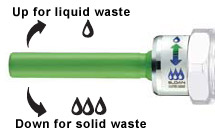
Well, while both are well intended, research shows that dual flush toilets and automated faucets use more water than expected from the flush and flow rate specifications. Depending on what type of fixture they are replacing, they can actually increase indoor water use.  Dual flush toilets typically use more water than projected because the flush mechanism is not aligned with user behavior, meaning the dual flush handle is designed to pull up for a low-flow flush and down for a full flush.  As we toilet users are already conditioned to push the handle down, our primary behavior decreases the efficiency of the toilets. The appropriate use of the handle can be increased through the education of building occupants; however some building owners have elected to reverse the handle design to align with user behavior.  Also, the type of building occupant must be considered; for example, if the building primarily serves visitors then education is not effective. Furthermore, dual flush fixtures never make sense in bathrooms where urinals are present, as the toilet is typically used only for the full flush in this instance. There is a great resource available, called Maximum Performance (MaP), that shows the performance specifications of many toilets available on the market, comparing performance of waste removal (grams per flush) and flow rate.  For example, many toilets flush 1,000 grams per flush with 1.28 gallons of water per flush (20% water savings compared to code). In summary, single low-flush toilets are the best at sufficiently eliminating solid waste and guaranteeing water savings.

Research also shows that automatic faucets – though hygienic – use more water than they should, due to incorrectly installed sensors, phantom uses (turning on without being triggered by an intentional hand), and always operating at full flow (instead of the variable flow of manual fixtures).  Aerators are likely a more effective, and less expensive, retrofit for reducing water consumption. If installing automatic faucets, pay careful attention to product specifications to ensure the sensor calibration is noted and accurate and the cycle time is aligned with the design intent.

4.  What are some in-house activities that we might be able to do to reduce energy consumption without needing outside contractors?

For larger, more complex buildings and/or portfolios, there are two primary operations and maintenance strategies that encompass many of the known and documented best management practices – building re-tuning and energy information systems.

Re-tuning is a comprehensive set of activities that evaluate a buildings’ energy management and control systems to ensure that schedules and controls are appropriate and operating correctly. Re-tuning seeks to identify and correct building operational problems that lead to energy waste, ensuring maximum energy efficiency and occupant comfort year after year. Essentially, re-tuning is a scaled-down version of retro-commissioning.  A key difference between re-tuning and retro-commissioning is that, once properly trained, re-tuning can be done with in-house staff, whereas retro-commissioning typically requires an outside contractor. Furthermore, because re-tuning is done in-house, building operators and owners take ownership of the faults and corrective actions, ensuring persistence with energy savings. Re-tuning and Energy Information Systems are complimentary to each other, as re-tuning relies on energy analysis to evaluate the economic impact of corrective actions.

Energy Information Systems (EIS) are advanced energy tracking software, hardware, and communication technologies used to store, analyze, and publish building energy information. EIS are not energy management and control systems (EMCS) or building automation systems (BAS), as these systems control the energy consuming systems in a building. Instead, EIS connect with the buildings’ EMCS or BAS to gather and track the energy data, then analyze the data against weather files, baselines and benchmarks and send alerts to managers. Additionally, EIS are not information dashboards, batch analysis tools, greenhouse gas footprint calculators, or environmental monitors. EIS pertain more specifically to efficient building operations by offering a proactive approach to energy management using meters and sophisticated software to read, analyze, and alert based on readings.  In essence, EIS supports real-time detection of energy waste, allowing staff to identify the cause and determine the appropriate response. EIS are a promising solution for building managers to continuously reduce energy use and costs. EIS may be too sophisticated for some building owners but the concept is scalable.  Small building owners can start small with whole building benchmarking and energy accounting. Studies show that simple benchmarking and tracking still result in energy savings, concluding that just by monitoring we notice simple opportunities for improvement. EPA analyzed the ENERGY STAR portfolio manager buildings and found that during the years 2008-2011 buildings had an average annual savings of 2.4%. The more sophisticated the accounting and tracking program, the more energy savings potential. One study found that permanent metering and continuous monitoring saved 9% in energy use.  Other studies show that buildings with sophisticated EIS save up to 25% energy costs.
Re-tuning and EIS focus on the operational efficiency of building operations.  Often operations and maintenance best management practices focus on improving maintenance procedures and equipment efficiency, however, facilities staff should equally consider how their building is wasting energy because no matter how efficiently your equipment is running, if it’s running when it doesn’t need to be you are wasting precious money and resources.

Tuesday, November 5, 2013

Technology Backing Traditional Wisdom in Sustainable Construction


People often think of sustainable construction as if it was a new concept, when in reality it is the concept of wastefulness in construction that is novel. Throughout much of history people built their homes with environmentally benign materials that were locally sourced and readily available out of necessity.  Over time, it was discovered that using certain designs, orientations, material choices, and construction methods could lead to homes that maximized comfort and functionality for residents.   

For example, Ancient Syrians discovered that they could construct beehive shaped mud huts that would keep them cool in their hot, arid desert climate.  The mud used to build these huts has a relatively high thermal mass so it is slow to absorb or release energy. Few or no windows prevent radiant heat gains in the huts. A small hole in the center of the elevated ceiling allows for hot air to rise and escape the structure. This leads to these structures staying cool during the day and somewhat warm at night. 
Cliff dwellings constructed by the Pueblo Indians are another great example of using natural surroundings and passive design strategies to maximize comfort.  Entire villages constructed out of stone have been discovered built into southern facing cliffs and nestled underneath natural rock overhangs.  These overhangs effectively minimize unwanted direct solar heat gain during the summer months while allowing for much needed heat gains the winter months.  The rock overhang also provides residents with protection from rain and snow.  

While it is not practical for everyone to have a stone house built into the side of a cliff, nor do most westerners want to live in a mud hut, it is possible to use a higher percentage of locally sourced materials and take advantage of passive design strategies to optimize the performance of your building.

As written by the ancient Greek philosopher Aeschylus, “Only primitives & barbarians lack knowledge of houses turned to face the winter sun.”  

But as I walk through my neighborhood it seems as though houses were dropped on their site with no consideration of the buildings orientation. 

So has the technological “advancement” of the human race somehow caused us to revert primitives and barbarians without enough sense to even attempt to take advantage of the free energy from the sun? Are we content relying on the brute strength of our HVAC systems to regulate our comfort instead of taking advantage of the synergistic opportunities of good design and construction.

Sure, technology certainly has the potential to enhance the comfort and functionality of homes but it often comes with negative impacts on the environment and consequently, our health.

I assert that technology must not take place of previously developed designs & construction methods that we now refer to as “sustainable,” rather it should be used to optimize and build upon these previously established construction principles.

In the past, building designs were refined and optimized from the process of trial and error over many years.  Now software exits capable of running building performance simulations to give us a better idea of they will perform before we construct them.  These simulations allow us to better understand how a variety of factors such as climate, building orientation and design, material selection and construction methods impact a building’s ultimate performance. 

In addition, advancements in windows, air sealing techniques, and insulation have made building more efficient houses even easier than ever before. 

Even something as simple as landscape considerations can positively impact the performance of your building. 

Passive design, when done properly, can reduce the need for mechanical heating and cooling and allow for HVAC systems to be scaled down.

In conclusion, there is no denying that technology is here to stay; however, we should not solely rely on technology for our comfort.  Past cultures have proven that thoughtful design can produce structures that make the best out of natural surroundings.  Technology should build upon passive design strategies instead of being use in lieu of passive strategies. Thoughtfully designed and constructed houses do not have to cost more than an average house and will use considerably less energy. To me, this is an obvious choice. 


Thursday, October 31, 2013

Software to Help Make New Buildings Greener

By Molly Armbrister September 6, 2013  Northern Colorado Business Report

A team of Colorado State University researchers is developing a software tool that will allow architects to shrink the carbon footprint of a building while it’s being designed, reducing future greenhouse gas emissions and costs.

The research, called the Carbon Footprint Metric Project, was made possible by a $600,000 grant from the National Science Foundation awarded Aug. 1 and eventually will allow the team to create a software tool that will work in concert with software already used by architects to design buildings.


To read the full article, visit the Northern Colorado Business Report website http://www.ncbr.com/article/20130906/EDITION/130909959/0/SEARCH